
September 23, 2026
Home EV Charger Costs: What Ontario Owners Pay
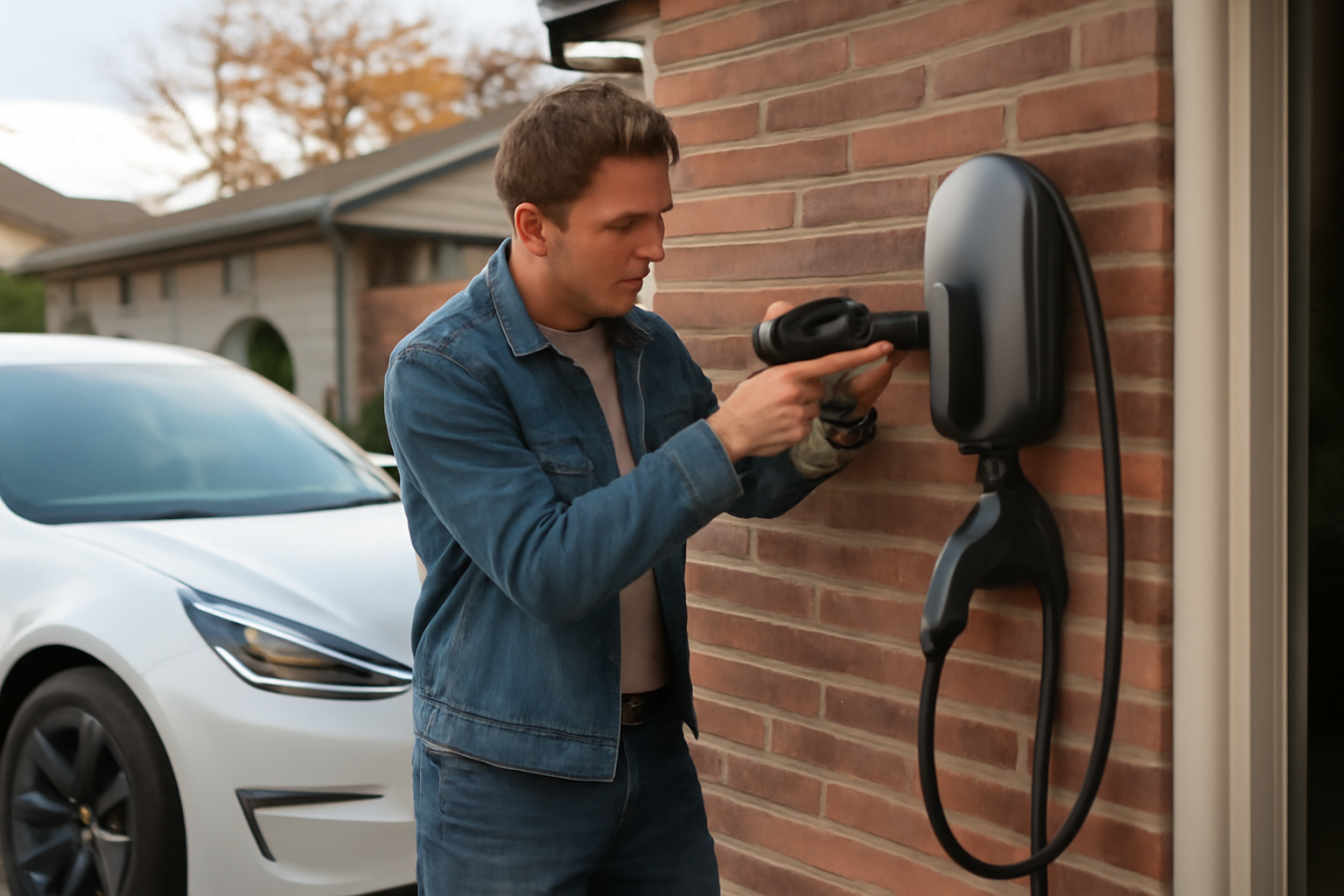
Thinking About a Home EV Charger? Here Is What It Actually Costs in Ontario Right Now.
More buyers are arriving at showings with one question I used to almost never hear: "Is the panel ready for an EV charger?" That tells you something about where the market is heading.
Whether you already own an EV, you're shopping for a home with one in mind, or you're just curious what the upgrade would run, here is a plain-language breakdown of the costs, the code requirements, and a timing trick that can slash your monthly charging bill.
Level 1, Level 2, or Level 3? Picking the Right One.
The three charging levels are not interchangeable. What works for one household can be completely wrong for another.
Level 1 plugs into any standard household outlet. No installation needed, but it only delivers roughly 5 to 8 kilometres of range per hour. If you drive a plug-in hybrid or cover very little ground each week, it may be enough.
Level 2 is what most homeowners are actually asking about. It runs on 240 volts, charges dramatically faster, and is the standard choice for a dedicated home charging setup. This is where the real installation conversation begins.
Level 3 (DC fast charging) requires much higher electrical capacity than a typical home can support. It belongs in commercial and public settings, not residential garages.
What You Will Spend: Installation Costs in 2026
For a typical single-family home in Ontario, a complete Level 2 charger installation generally lands somewhere between $1,100 and $2,500 or more, all-in. The range is wide because the distance between your electrical panel and where the charger will live matters a lot. So does the condition of your panel.
Hardware prices vary by brand, connector type, and current promotions. A couple of products worth knowing:
- The Grizzl-E line is frequently noted for cold-weather performance, which matters in an Ontario winter. Independent testing has highlighted its reliability in low temperatures.
- Tesla's Wall Connector can be a cost-effective hardwired option, particularly for households already within the Tesla or NACS charging ecosystem.
Treat any price you see online as a ballpark. Get a quote from a Licensed Electrical Contractor once you know your panel situation.
Is Your Electrical Panel Ready?
A Level 2 charger is classified as a "continuous load" under the electrical code. That means it can draw its full rated current for several hours straight, which puts real pressure on your panel. Here is how the common service sizes stack up:
60-amp service (pre-1960s homes): Not adequate for Level 2 charging without a full service upgrade.
100-amp service (mid-to-late 20th century): Workable in some cases, but tight. Add a Level 2 charger on top of an electric range, a dryer, and central air conditioning, and you may exceed what the panel can safely handle.
200-amp service (today's standard): Generally provides enough headroom for a dedicated 40A or 50A circuit with no service upgrade required.
If your panel comes up short, you have options short of a full upgrade. An Electric Vehicle Energy Management System, or EVEMS, can dynamically manage the load. Choosing a lower-amperage charger can also help keep things within safe limits.
Permits, Inspections, and What the Law Requires
Ontario Regulation 164/99 is clear on this: before any wiring starts, a Notification of Work must be filed with the Electrical Safety Authority (ESA). The installation itself must be carried out by a Licensed Electrical Contractor (LEC). Once the work is done, an ESA inspector verifies the wiring, the breaker sizing, and the grounding, then issues a Certificate of Acceptance.
Keep that Certificate of Acceptance with your other home documents. If a buyer's lawyer spots a 240V charger in the garage during a purchase, they will ask for it.
If you are buying a new home in Ontario, the infrastructure conversation is simpler. Under the EV-Ready Homes Act (Bill 199) and related Building Code requirements, applicable new builds must include a minimum 200-amp panel, a 27 mm conduit run from the panel to the garage or driveway, and a standardized junction box. The charger itself is not included, but the groundwork is already there, which can significantly reduce what you spend when you are ready to install.
The Trick That Changes Everything: When You Charge
Charging hardware and installation are one-time costs. Your electricity rate plan affects every single charge for the life of the vehicle.
On standard Ontario Energy Board (OEB) Time-of-Use pricing, a full 75 kWh charge costs approximately $7.35. On the Ultra-Low Overnight (ULO) plan, that same charge drops to around $2.93, charged after 11 p.m. That is a difference of more than 60 percent on every charge.
The trade-off with ULO is its on-peak rate of 39.1 cents per kilowatt-hour between 4 and 9 p.m. on weekdays. The plan works well if your household can shift major appliance use away from those hours. A smart charger makes this automatic by scheduling your charge to start at 11 p.m.
Ontario is also moving toward managed EV charging, where software adjusts charging times based on real-time grid conditions. Utilities including Enova Power, Oshawa Power, Oakville Hydro, and Essex Powerlines have partnered on a province-wide initiative through BluWave-ai that allows participating customers to charge at optimized times automatically.
If a garage-ready setup or an EV-friendly new build is on your list, here are a few properties on the market right now that are worth exploring.
A home EV charger is becoming less of a nice-to-have and more of a standard feature buyers notice, and ask about. Whether you are thinking about adding one to your current home or factoring it into your next purchase, the details above should give you a solid starting point.
Thinking about a move in the GTA?
Haider Bokhari · RE/MAX Real Estate Centre Inc. can help — no pressure, just honest advice.